
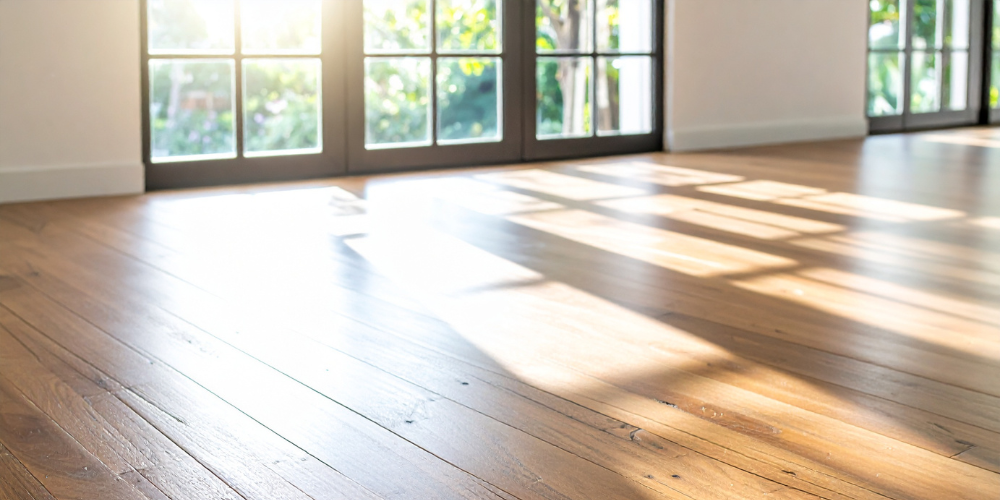
When homeowners start shopping for wood flooring, one of the first questions that comes up is hardwood vs. engineered wood. At first glance, they may look nearly identical—but how they’re constructed, how they perform, and where they work best can be very different.
Choosing the right option depends on your home, your lifestyle, and the specific room you’re flooring. Understanding the differences upfront can help you avoid costly mistakes and ensure your floors look great for years to come.
What Is Solid Hardwood Flooring?
Solid hardwood flooring is made from a single piece of natural wood, typically ¾” thick. Popular species include oak, maple, hickory, and walnut. Because it’s solid all the way through, it can be sanded and refinished multiple times over its lifespan.
Benefits of Solid Hardwood
- Timeless, natural appearance
- Can be refinished several times
- Long lifespan (often 50–100 years with proper care)
- Adds strong resale value to a home
Considerations
- Sensitive to moisture and humidity
- Not ideal for basements or high-moisture areas
- Requires a stable subfloor and professional installation
Solid hardwood performs best in living rooms, dining rooms, bedrooms, and hallways where moisture levels remain consistent.
What Is Engineered Wood Flooring?
Engineered wood is constructed with a real hardwood veneer on top and multiple layers of plywood or fiberboard beneath it. This layered construction gives engineered wood added stability.
Visually, engineered wood looks like solid hardwood—but structurally, it’s designed to handle more challenging environments.
Benefits of Engineered Wood
- Greater resistance to moisture and humidity
- More versatile installation options (glue-down, floating, or nail-down)
- Suitable for basements and concrete subfloors
- Typically more budget-friendly
Considerations
- Refinishing depends on veneer thickness
- Lifespan varies by product quality
- Not all engineered floors can be sanded multiple times
Engineered wood is often the better choice for basements, condos, kitchens, and homes with fluctuating humidity.